
What a Technician Sees on These Calls
The call usually comes in the day after a windstorm. A homeowner says the door looks "pushed in" or won't sit flush at the bottom anymore. On inspection, it's almost always the same thing: one or two panels have bowed outward from wind pressure, the track has pulled away from the wall on one side, or a roller has popped out of its track entirely. Sometimes it's worse — a full section buckled because the door was down but not braced for the gust that hit it. None of this is rare in Frederick County, where fall brings fast-moving storm fronts and the kind of straight-line wind that catches a flat garage door like a sail.
Why the Garage Door Is a Home's Weakest Wall
Every other wall in your house is a continuous, fastened structure. A garage door is a large panel of thin steel or wood, hung on hinges and rollers, held shut mostly by its own weight and a motor that isn't built to resist lateral force. When wind pushes against the front of a home, that door is the one surface designed to move. In older homes around Adamstown without reinforced doors, there's often no internal bracing at all — just the panel skin and a thin frame. In a strong gust, that's not enough, and once a garage door fails, wind can get inside the garage and push up on the roof from underneath, which is how storm damage spreads from "we lost a garage door" to "we lost part of a roof."
Getting the Door Ready Before the Next Windstorm
Check the Panels and Track First
Walk the outside of the door and look for any panel that already has a slight bow, dent, or separation at the seams. A panel that's compromised now will fail first under wind load. Also check that the vertical tracks are bolted tight to the wall studs — a loose track is one of the fastest ways for a door to jump off its rollers mid-storm. If you see visible gaps where the track meets the wall, or rust at the mounting brackets from past rain exposure, that's worth tightening or replacing before wind season peaks.
Reinforcement Matters More Than People Think
Many standard residential doors, especially on older Frederick County homes, were never built with horizontal struts across the back of each panel. These struts are what actually keep a door from flexing and buckling under wind pressure. If your door doesn't have them, adding bracing is one of the more practical upgrades you can make before storm season — it's far cheaper than replacing a buckled door after the fact, and it doesn't change how the door looks from the street.
Weatherstripping and the Bottom Seal
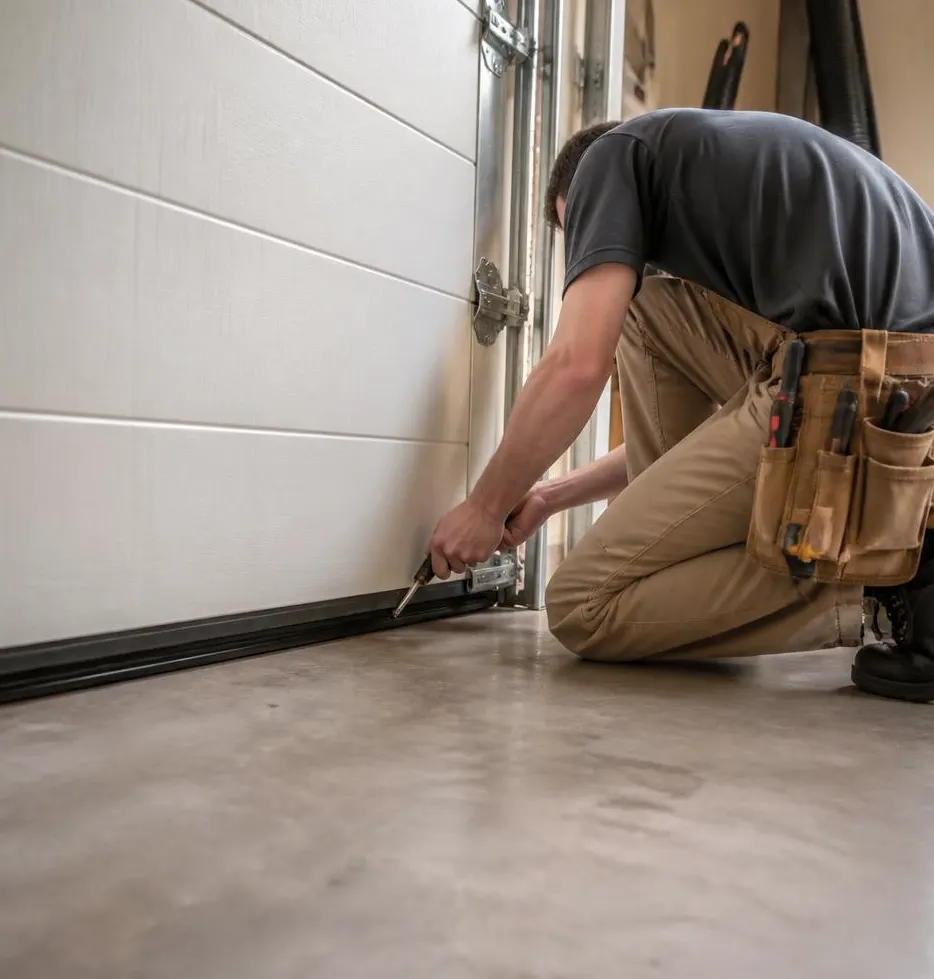
Heavy rain and wind-driven water go hand in hand here. If the rubber seal along the bottom of the door is cracked, flattened, or pulling away from the track, water will find its way under the door during a driving rainstorm, not just pool outside it. Side and top weatherstripping matters too — gaps there let both water and wind pressure in around the edges. Replacing worn seals is inexpensive and takes an afternoon, but it's one of the most commonly skipped maintenance items until there's already water on the garage floor.
Opener and Backup Power
Storms that bring high wind in this area often bring power outages with them. If your opener doesn't have battery backup, a dead power supply means the door is stuck wherever it was left — which is a problem if it was open when the storm hit, or if you need to get a vehicle out during an emergency. Battery backup units are a reasonable add-on for anyone who's lost power more than once or twice during a fall or winter storm.
Springs Behave Differently as Temperatures Drop
Fall is also when nighttime temperatures start dropping fast, and cold metal doesn't flex the way it does in summer. Springs under tension can become more brittle in cold weather, and a door that was balanced fine in August can start feeling heavier or jerkier to open by November. This is also when a spring that's near the end of its lifespan is most likely to snap — usually on the exact morning you need to leave for work. A quick balance check and lubrication of hinges, rollers, and springs before the first hard freeze goes a long way toward avoiding that.
When to Call Adamstown Garage Door
If you've noticed a bowed panel, a track pulling away from the wall, a door that's grown noticeably heavier to lift, or weatherstripping that's cracked and letting in daylight, those are all signs worth addressing before the next storm rather than after. Our Garage Door Maintenance service covers exactly this kind of pre-storm check — balance, hardware, seals, and track alignment — and catches small issues while they're still cheap fixes. If a spring has already failed or a panel is damaged, our Spring Replacement and repair work gets the door back to full strength rather than just patched. And if a storm already got ahead of you, we offer emergency service for exactly that situation.
If you're in Adamstown, Frederick, Buckeystown, Urbana, New Market, Ijamsville, Clarksburg, or Barnesville and want your garage door checked before the next round of fall storms rolls through, give Adamstown Garage Door a call. We'll take a look, tell you honestly what needs attention, and get it handled before wind and rain make the decision for you.