
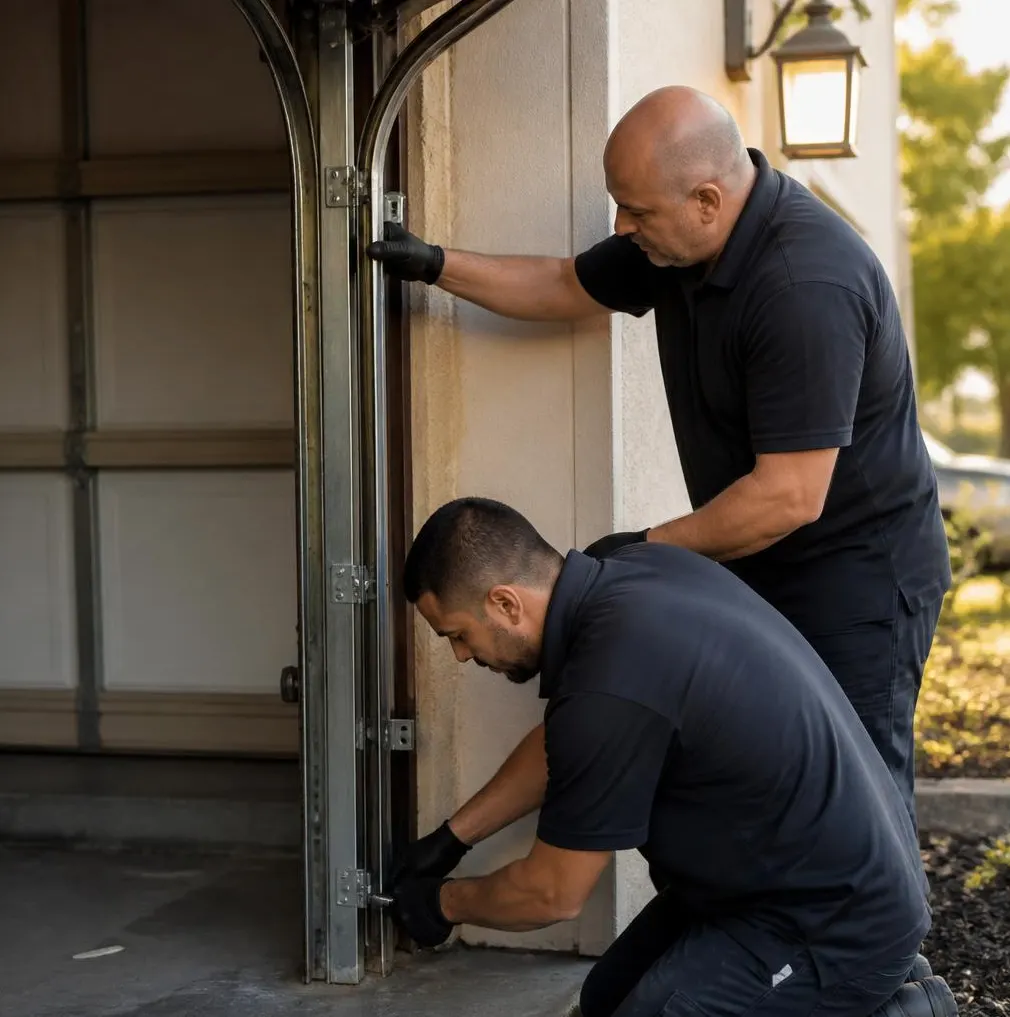
The short answer
Get your garage door winter-ready by checking the weatherstripping, having the springs and hardware inspected before the first hard freeze, lubricating moving parts with a cold-weather lubricant, and making sure your opener has battery backup. Do this in October or early November, before ice and single-digit mornings make small problems worse.
Garage doors in this part of Frederick County take a real beating from November through March. Humid summers swell wood and seals, then winter cold makes everything contract and stiffen. Add heavy rain, the occasional coastal storm, and older homes with doors that may not have been updated in years, and you've got a setup where minor issues turn into stuck doors, broken springs, or a garage that lets in cold air all winter long.
Check and replace weatherstripping
The rubber seal along the bottom of the door and the strips along the sides and top are your first defense against wind-driven rain and cold air. By October, inspect them for cracking, flattening, or gaps where daylight shows through.
- Bottom seal: If it's cracked, brittle, or no longer makes solid contact with the concrete, replace it. A worn bottom seal lets in meltwater and cold air, which can freeze to the floor overnight.
- Side and top seals: Look for sections pulling away from the frame. These are inexpensive to replace and make a noticeable difference in draft and noise.
- Older homes: If your house has an original door and frame, the seals may be outdated or missing entirely in spots. This is one of the easiest upgrades for the money.
Have springs and hardware inspected before the cold sets in
Torsion and extension springs are under constant tension, and cold steel is more brittle than warm steel. A spring that's been slowly wearing out all year is far more likely to snap on a freezing January morning than in July. Watch for these signs now, while a technician can still schedule a straightforward swap instead of an emergency call:
- The door feels heavier than usual when lifted by hand (with the opener disconnected).
- Visible gaps in the coils of the spring, or a spring that looks stretched.
- A loud bang from the garage — often a spring failing.
- The door opens unevenly or jerks partway through its cycle.
Spring replacement isn't a DIY job; the tension involved can cause serious injury. But getting it inspected in fall, rather than waiting for a failure in freezing weather, is the difference between a scheduled repair and an emergency one.
Lubricate the moving parts — with the right product
Hinges, rollers, and the torsion spring itself need lubrication before winter, but not just any household oil. Use a silicone-based or lithium-based garage door lubricant, which stays effective in cold temperatures. WD-40 and similar light oils tend to thin out and attract grit, which actually speeds up wear.
- Wipe down tracks and rollers to remove summer dust and pollen buildup first.
- Apply lubricant to hinges, rollers, the torsion spring, and the opener's chain or screw drive.
- Avoid lubricating the track itself — it should stay clean and dry, not slick.
A well-lubricated door runs quieter and puts less strain on the opener motor when temperatures drop and metal contracts.
Give your opener a backup plan
Ice storms and heavy winter rain in this area can knock out power, sometimes for hours. If your opener doesn't have battery backup, you're stuck manually releasing the door (which you should know how to do) until power returns. Many newer openers include a battery backup as standard; if yours doesn't, it's worth adding before the season's first ice event rather than during one. While you're at it, replace the opener's remote and keypad batteries — cold weather drains them faster.
Address ice buildup at the base of the door
Where driveways slope toward the garage, or where gutters dump runoff nearby, water can pool at the threshold and freeze solid overnight, sealing the door shut or damaging the bottom panel when it's forced open. A few preventive steps:
- Clear leaves and debris from the area directly in front of the door before the ground freezes.
- Check that downspouts direct water away from the garage entrance rather than toward it.
- Consider a threshold seal kit if your current bottom seal isn't keeping water out.
Think about insulation if your garage is attached
If your garage shares a wall with living space, an uninsulated door means that wall is losing heat all winter. Insulated doors, or retrofit insulation kits for existing doors, help keep the attached garage — and the rooms next to it — noticeably warmer. This matters more in older Adamstown-area homes built before insulated doors were standard, and less in newer construction that may already have one installed.
When to call Adamstown Garage Door
If you've gone through this checklist and still have a door that's noisy, heavy, slow to respond, or showing a worn spring, it's time to bring in a technician before winter forces the issue. We handle garage door maintenance visits that cover spring tension, hardware, and lubrication in one trip, and we also do spring replacement safely when a spring is past its usable life. If a storm knocks something loose or a door won't open at all, our emergency garage door service covers that too, any time of year.
Don't wait for a freezing morning and a door that won't budge. Call Adamstown Garage Door today to schedule your pre-winter maintenance visit and head into the cold season with a door that works the way it should.